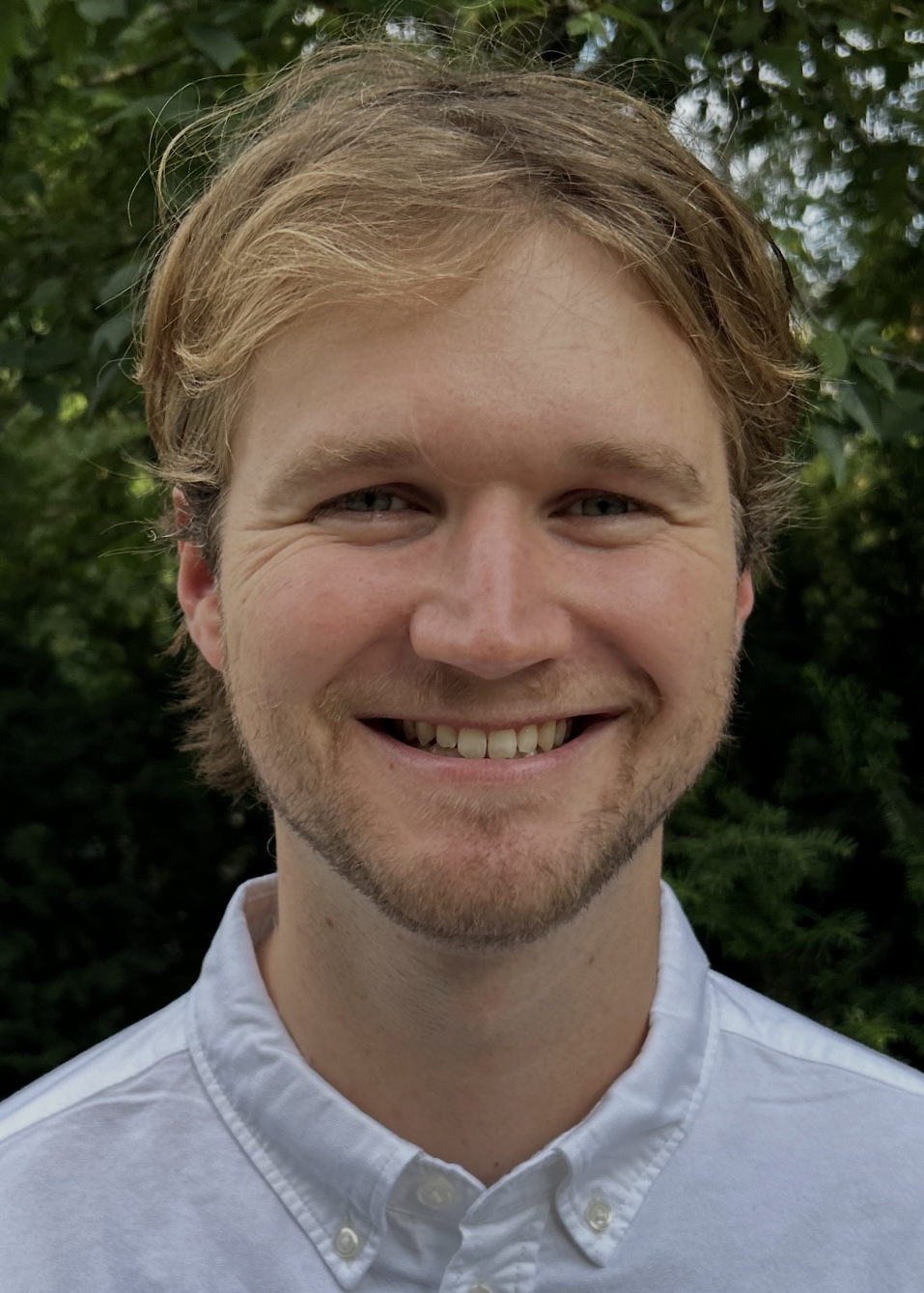
JULIUS KINDSGRAB
Currently at Germany's largest conservation NGO, where I cut a democratic strategy development process in half and am now building an AI system to do my job for me. Background in ecology, climate modeling, and quantitative analysis. I learn fast, build tools to eliminate manual work, and work best when the problems are hard and the stakes are high.
Derzeit bei Deutschlands größtem Naturschutzverband, wo ich einen demokratischen Strategieentwicklungsprozess halbiert habe und jetzt ein KI-System baue, das meinen Job übernimmt. Hintergrund in Ökologie, Klimamodellierung und quantitativer Analyse. Ich lerne schnell, baue Tools, um manuelle Arbeit zu eliminieren, und arbeite am besten, wenn die Probleme schwer und die Einsätze hoch sind.
Looking for roles where I own outcomes, not process — in a team that moves fast and expects me to grow.
Auf der Suche nach Rollen, in denen ich Ergebnisse verantworte, nicht Prozesse — in einem Team, das schnell arbeitet und erwartet, dass ich wachse.
Q&A
Mornings are for real work: notifications off, one project at a time, step by step, as far as I can take it. I'm happy if I can get two or three continuous working blocks per day. Meetings should mostly be banished, but if truly unavoidable, belong in the afternoons. I like working in an office, close to my colleagues, so that when in doubt I can simply walk up to them and ask for anything I might need.
When I am given a complex task my natural instinct is to dive right in and deal with problems as they emerge. I am trying to integrate a minimal amount of planning at the beginning of projects, so as to better direct my initial work and minimize the re-orientation necessary, though I am finding it difficult to find the right balance between over- and under-planning. It's a process, I guess.
My natural collaboration mode is to disappear into a problem, brain dump everything onto the page, structure it, fine-tune it, and come back with something fairly polished. The upside: I deliver reliably, I take ownership, and what I produce is thorough. The downside: I can burrow too deep into a specific problem and miss the broader picture. My best work happens when I have the independence to go deep, and have teammates around me who pull me out when my focus gets too narrow.
Vormittags wird richtig gearbeitet: Benachrichtigungen aus, ein Projekt auf einmal, Schritt für Schritt, so weit wie ich komme. Ich bin zufrieden, wenn ich zwei oder drei durchgehende Arbeitsblöcke pro Tag bekomme. Meetings sollten größtenteils verbannt werden, aber wenn wirklich unvermeidbar, gehören sie in den Nachmittag. Ich arbeite gerne im Büro, nah an meinen Kolleginnen und Kollegen, damit ich im Zweifel einfach zu ihnen gehen und nach allem fragen kann, was ich brauche.
Wenn ich eine komplexe Aufgabe bekomme, ist mein natürlicher Instinkt, direkt reinzuspringen und Probleme zu lösen, wenn sie auftauchen. Ich versuche, ein Minimum an Planung am Anfang von Projekten zu integrieren, um meine anfängliche Arbeit besser zu lenken und die nötige Neuorientierung zu minimieren. Allerdings finde ich es schwierig, die richtige Balance zwischen Über- und Unterplanung zu finden. Es ist ein Prozess, denke ich.
Mein natürlicher Kollaborationsmodus ist, in ein Problem abzutauchen, alles auf die Seite zu kippen, zu strukturieren, zu verfeinern und mit etwas ziemlich Ausgearbeitetem zurückzukommen. Der Vorteil: Ich liefere zuverlässig, ich übernehme Verantwortung, und was ich produziere, ist gründlich. Der Nachteil: Ich kann mich zu tief in ein spezifisches Problem vergraben und das Gesamtbild übersehen. Meine beste Arbeit entsteht, wenn ich die Freiheit habe, tief einzutauchen, und Teammitglieder um mich herum habe, die mich rausholen, wenn mein Fokus zu eng wird.
If you are hiring for a job in a mature, highly regulated environment where the rules are already written and unchangeable, you should absolutely hire me only if your goal is sabotage. Joking aside, I've done that type of work and I did my job. But I'm ready to move on. When the environment is slow and there's no problem demanding my full cognitive capacity, I default to dormancy.
I also fail when I am managed by input metrics rather than output. If I finish a ten-hour task in two hours by building an automated tool, and my only reward is eight hours of manufactured busywork to run down the clock, I will lose my mind. I need tight deadlines and constraints to activate.
From the inside, my decline into bad work usually starts with "productive procrastination." When the urgency dies and I don't have a clear, immediate target, I retreat into theory. I will convince myself I need to read hundreds of pages of management philosophy before I can take action. I start mistaking planning for execution.
To keep me out of this trap, I must be managed by the complexity of the problems I solve, not the hours I log, and I need the authority to go hunt for broken internal systems, or I need someone to point me straight at the next fire.
Wenn ihr für eine Stelle in einem ausgereiften, stark regulierten Umfeld einstellt, in dem die Regeln bereits geschrieben und unveränderbar sind, solltet ihr mich nur einstellen, wenn euer Ziel Sabotage ist. Spaß beiseite — ich habe solche Arbeit gemacht und meinen Job erledigt. Aber ich bin bereit, weiterzuziehen. Wenn das Umfeld ruhig ist und es kein Problem gibt, das meine volle kognitive Kapazität fordert, verfalle ich in Stillstand.
Ich versage auch, wenn ich nach Input-Metriken statt nach Output gemanagt werde. Wenn ich eine Zehn-Stunden-Aufgabe in zwei Stunden erledige, indem ich ein automatisiertes Tool baue, und meine einzige Belohnung acht Stunden künstliche Beschäftigungstherapie ist, um die Uhr runterzuzählen, werde ich durchdrehen. Ich brauche enge Deadlines und Constraints, um zu aktivieren.
Von innen beginnt mein Verfall in schlechte Arbeit meistens mit „produktiver Prokrastination". Wenn die Dringlichkeit nachlässt und ich kein klares, unmittelbares Ziel habe, ziehe ich mich in die Theorie zurück. Ich überzeuge mich selbst, dass ich Hunderte Seiten Managementphilosophie lesen muss, bevor ich handeln kann. Ich verwechsle dann Planen mit Handeln.
Um mich aus dieser Falle herauszuhalten, muss ich nach der Komplexität der Probleme gemanagt werden, die ich löse, nicht nach den Stunden, die ich absitze. Und ich brauche die Befugnis, kaputte interne Systeme zu jagen, oder jemanden, der mich direkt auf das nächste Feuer richtet.
After optimizing a democratic strategy development process at Germany's largest conservation NGO (900,000 members), I became bored. The process was running smoothly and there was not much for me to do except manage it through day-to-day operations. I realized I needed a new challenge, and being intrigued by AI, I decided to see how far I could automate my job.
I built a prototype of a web app designed specifically for the process I was managing. The tool puts the process knowledge and decision-making power directly in the hands of the colleagues doing the work, instead of routing everything through a coordinator (me). My vision was to eliminate the need for my job. Well, really it was to free me up to do something more rewarding, while in the process doing something more rewarding.
I pitched my bosses on the idea, got their approval, and am currently building it. Initial use has confirmed the approach works, and when this tool is done it will have eliminated the need for one full-time position, the resources for which can now be put to more creative work instead of process management.
All of this I did in a deeply conservative and risk-averse organization, which had gone through an essentially useless process of deciding on organizational AI use, which culminated in nothing more than a "try some Co-Pilot and see how that goes".
Nachdem ich einen demokratischen Strategieentwicklungsprozess bei Deutschlands größtem Naturschutzverband (900.000 Mitglieder) optimiert hatte, wurde mir langweilig. Der Prozess lief rund und es gab nicht viel für mich zu tun, außer ihn im Tagesgeschäft zu managen. Ich erkannte, dass ich eine neue Herausforderung brauchte, und weil mich KI faszinierte, beschloss ich zu sehen, wie weit ich meinen Job automatisieren kann.
Ich baute einen Prototyp einer Web-App, die speziell für den Prozess entwickelt wurde, den ich managte. Das Tool legt das Prozesswissen und die Entscheidungskompetenz direkt in die Hände der Kolleginnen und Kollegen, die die Arbeit machen, statt alles über einen Koordinator (mich) zu leiten. Meine Vision war es, die Notwendigkeit meines Jobs zu eliminieren. Naja, eigentlich wollte ich mich für etwas Lohnenderes freimachen und dabei gleichzeitig etwas Lohnenderes tun.
Ich stellte meinen Vorgesetzten die Idee vor, bekam ihre Freigabe und baue das Tool derzeit. Erste Nutzung hat den Ansatz bestätigt, und wenn dieses Tool fertig ist, wird es eine Vollzeitstelle überflüssig gemacht haben, deren Ressourcen nun für kreativere Arbeit statt Prozessmanagement eingesetzt werden können.
All das habe ich in einer zutiefst konservativen und risikoaversen Organisation gemacht, die einen im Grunde nutzlosen Prozess zur Entscheidung über organisationale KI-Nutzung durchlaufen hatte, der in nichts weiter gipfelte als einem „Probiert mal Co-Pilot aus und schaut, wie das so läuft".
My bias is to push through. When I start something, I finish it. Mostly that has served me well, but the most expensive wrong call I have made was not quitting my master's degree in Ecology early. That experience taught me that persistence is not always a virtue. The older I get, the more quickly I try to quit things that don't work.
In practice, my decision-making process is intuition-heavy. I try to load my mind with high quantities of high-quality information, which I let simmer and work their way through my system. I then tune in to how my gut feeling reacts to this – understanding that the subconscious digests more information more deeply than my conscious mind can. I then try to put into words what my gut feeling is telling me and make my decision.
For decisions with measurable outcomes (like my weight, or in professional contexts hours saved by changing a workflow), I try to define what success and failure look like before I start. If the data says the strategy isn't working, I redesign or I quit.
Meine Tendenz ist durchzuhalten. Wenn ich etwas anfange, bringe ich es zu Ende. Meistens hat mir das gut gedient, aber der teuerste Fehlgriff war, meinen Master in Ökologie nicht früh abzubrechen. Diese Erfahrung hat mir beigebracht, dass Durchhaltevermögen nicht immer eine Tugend ist. Je älter ich werde, desto schneller versuche ich, Dinge aufzugeben, die nicht funktionieren.
In der Praxis ist mein Entscheidungsprozess stark intuitionsgetrieben. Ich versuche, meinen Geist mit großen Mengen hochwertiger Informationen zu füllen, die ich köcheln lasse und durch mein System arbeiten lasse. Dann horche ich darauf, wie mein Bauchgefühl darauf reagiert, im Wissen, dass das Unterbewusstsein mehr Informationen tiefer verarbeitet als mein bewusster Verstand. Dann versuche ich in Worte zu fassen, was mein Bauchgefühl mir sagt, und treffe meine Entscheidung.
Für Entscheidungen mit messbaren Ergebnissen (wie mein Gewicht oder im beruflichen Kontext eingesparte Stunden durch Änderung eines Workflows) versuche ich, vor dem Start zu definieren, wie Erfolg und Misserfolg aussehen. Wenn die Daten sagen, dass die Strategie nicht funktioniert, gestalte ich um oder gebe auf.
I am much more capable today than I was a year ago. A year ago I used AI to help me do coding for my master thesis. Two weeks ago I built a fully functional three-stage financial model for a hypothetical startup in two days, using AI to plan how to build it, act as my Socratic tutor to help me understand the concepts, and do the formatting in Excel — and I knew nothing about financial models when I started. Today I use AI to help me build a web app which itself uses AI to automate my entire job.
I like to volunteer for tasks that I know will challenge me and are outside of my current abilities. AI has intensified this instinct – I now believe that if I get a couple of days, with the help of AI I will be able to deliver 80% of the result in a fraction of the time and understand what I am doing. It has given me the confidence that whatever the ask, I will be able to deliver.
I don't have a grand theory about where AI is going. What I know is that AI has made me dramatically more capable in a very short time, and that trajectory shows no signs of slowing down.
Ich bin heute wesentlich fähiger als vor einem Jahr. Vor einem Jahr nutzte ich KI, um mir beim Programmieren für meine Masterarbeit zu helfen. Vor zwei Wochen baute ich in zwei Tagen ein voll funktionsfähiges dreistufiges Finanzmodell für ein hypothetisches Startup, wobei ich KI nutzte, um den Aufbau zu planen, als meinen sokratischen Tutor, um die Konzepte zu verstehen, und für die Formatierung in Excel. Und ich wusste nichts über Finanzmodelle, als ich anfing. Heute nutze ich KI, um eine Web-App zu bauen, die selbst KI nutzt, um meinen gesamten Job zu automatisieren.
Ich melde mich gerne freiwillig für Aufgaben, von denen ich weiß, dass sie mich herausfordern und außerhalb meiner aktuellen Fähigkeiten liegen. KI hat diesen Instinkt verstärkt. Ich glaube jetzt, dass ich, wenn ich ein paar Tage bekomme, mit Hilfe von KI 80% des Ergebnisses in einem Bruchteil der Zeit liefern und verstehen kann, was ich tue. Es hat mir das Vertrauen gegeben, dass ich, egal was gefragt wird, liefern kann.
Ich habe keine große Theorie darüber, wohin KI sich entwickelt. Was ich weiß, ist, dass KI mich in sehr kurzer Zeit dramatisch fähiger gemacht hat, und diese Entwicklung zeigt keine Anzeichen einer Verlangsamung.
SELECTED WORKAUSGEWÄHLTE ARBEITEN
NABU BETEILIGUNGSVERFAHREN TOOL
AI-powered web app that guides the user through a democratic strategy development process at Germany's largest conservation NGO. Puts process knowledge directly in the hands of colleagues, eliminating the need for a central coordinator.
KI-gestützte Web-App, die den Nutzer durch einen demokratischen Strategieentwicklungsprozess bei Deutschlands größtem Naturschutzverband führt. Legt das Prozesswissen direkt in die Hände der Kolleginnen und Kollegen und macht einen zentralen Koordinator überflüssig.
Built to eliminate my own job — and free resources for creative work.
Gebaut, um meinen eigenen Job zu eliminieren und Ressourcen für kreative Arbeit freizumachen.
02MASTER'S THESISMASTERARBEIT
Does high-resolution downscaling improve global flood model accuracy? Analyzed 18 flood events across 6 floodplains and 4 biomes at the Potsdam Institute for Climate Impact Research. Grade: 1.6.
Verbessert hochauflösendes Downscaling die Genauigkeit globaler Hochwassermodelle? Analyse von 18 Hochwasserereignissen über 6 Überschwemmungsgebiete und 4 Biome am Potsdam-Institut für Klimafolgenforschung. Note: 1,6.
Built end-to-end Python + GIS pipeline for multi-resolution flood analysis.
Durchgängige Python- + GIS-Pipeline für multi-auflösende Hochwasseranalyse gebaut.